
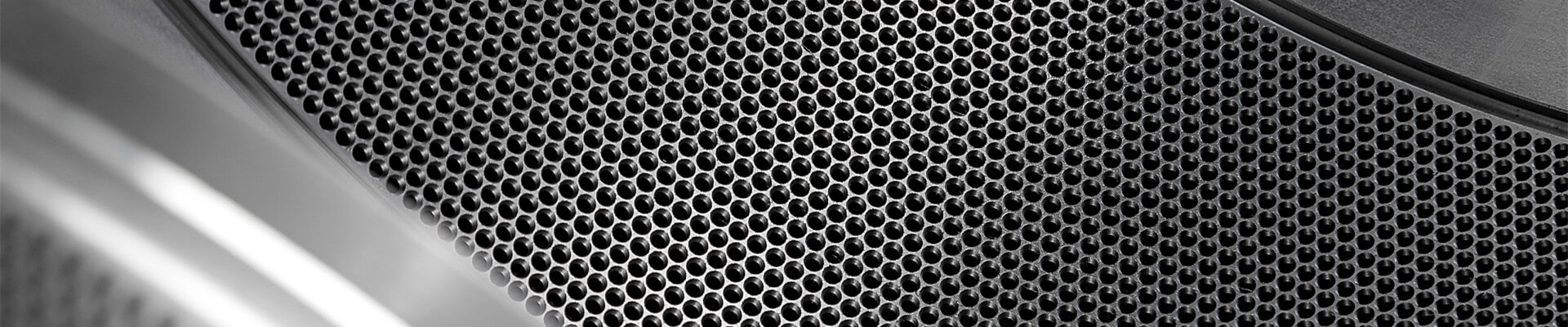
Pellet mills are machines used to compress conditioned raw materials into dense, uniform pellets for animal feed, biomass fuel, and other industrial applications. In a modern pelleting system, the pellet mill ring die is one of the most important wear parts because it directly determines pellet formation, discharge smoothness, production stability, and operating cost.
For feed producers, the right ring die influences much more than pellet shape. It affects pellet durability, output per hour, energy consumption, die life, fines rate, machine load, and even the stability of downstream cooling and screening. Choosing the wrong ring die can lead to low capacity, blocked holes, excessive wear, cracked pellets, or abnormal power draw.
This 2026 guide explains how to select the right pellet mill ring die with a practical, engineering-based approach. Instead of only comparing ring die and flat die concepts, we will focus on the critical selection factors for a pellet mill ring die: raw material characteristics, pellet size, die hole diameter, compression ratio, hole geometry, opening ratio, ring die material, manufacturing precision, roller shell matching, maintenance, and supplier capability.
If you are sourcing a replacement die for animal feed, poultry feed, livestock feed, aqua feed, ruminant feed, or biomass pellets, this article will help you make a more reliable decision and improve pellet mill efficiency over the long term.
1. What Is a Pellet Mill Ring Die and Why Does It Matter?
A pellet mill ring die is a porous annular component installed in a ring die pellet mill. During production, conditioned material enters the working zone between the ring die and the roller shell. Under the combined action of centrifugal force, friction, and roller extrusion, the material is compacted and pressed through the die holes, then cut into pellets of the required length.
Because pellet formation happens inside the die holes, the ring die has a direct influence on:
- Pellet size and density
- Pellet durability and surface finish
- Throughput and hourly capacity
- Power consumption and operating load
- Die hole blockage risk
- Wear rate of both die and roller shell
- Total production cost per ton
In short, when users ask how to improve pellet quality or increase pellet mill efficiency, the answer very often begins with correct ring die selection.
2. Types of Pellet Dies: Ring Die vs Flat Die
A. Explanation of flat die and ring die
There are two main die structures used in pelletizing equipment: the flat die and the ring die. A flat die pellet mill uses a flat plate die with holes distributed across the surface, while a ring die pellet mill uses a circular die combined with one or more roller shells. In industrial feed production, the ring die structure is widely preferred for continuous, high-capacity operation.
B. Pros and cons of each type
Flat die pellet mills are simpler, lower in cost, and often used for small-scale production or pilot applications. Ring die pellet mills are more suitable for commercial plants because they usually offer higher throughput, better pellet consistency, more stable operation, and improved automation compatibility. However, ring die systems are more demanding in terms of machining precision, maintenance discipline, and die/roller matching.
C. How to choose the right type of pellet die
When choosing between flat die and ring die pellet mills, consider production capacity, formula complexity, operating hours, and the value of pellet consistency. For industrial feed lines, a pellet mill ring die is usually the better long-term choice because it supports high output and better process control. For small-scale or entry-level applications, a flat die machine may be sufficient.
3. Key Factors When Selecting a Pellet Mill Ring Die
Selecting the right pellet mill ring die is not just a matter of matching dimensions. The die must fit the machine mechanically, but it must also match the raw material, pellet specification, conditioning level, target output, and operating strategy. The following factors should be evaluated together.
A. Raw material characteristics
The formula is the starting point of ring die selection. Different materials behave very differently during extrusion. High-fiber formulas, high-fat formulas, fine powders, ruminant feed, aqua feed, and biomass raw materials all require different hole designs and compression levels. A die that performs well on poultry feed may not perform well on wood fiber or aquatic feed.
B. Target pellet diameter and specification
Your required pellet diameter directly affects hole size selection. Feed for chicks, piglets, layers, fish, shrimp, cattle, or biomass fuel does not use the same hole diameter. Smaller pellets generally require smaller die holes and tighter processing control, while larger pellets may favor higher throughput but different compression requirements.
C. Machine brand and assembly dimensions
The die must match the pellet mill model exactly, including inner diameter, outer diameter, working width, mounting structure, bolt pattern, and keyway details. Many users order replacement dies for well-known pellet mill brands such as CPM, Bühler, FAMSUN, Muyang, Andritz, and Van Aarsen, so accurate technical drawings or original sample data are important.
D. Production objectives
Some plants prioritize maximum output, others prioritize pellet durability, low energy consumption, or longer service life. Ring die design is always a balance. A die optimized purely for output may not deliver the same pellet hardness or durability as one optimized for premium feed quality.
4. Pellet Mill Die Ratio: Focus on Compression Ratio and L/D Ratio
A. Explanation of the pellet mill die ratio
In practical pellet mill ring die selection, users should pay close attention to compression ratio and the L/D ratio rather than using only a simplified die-to-hole diameter comparison. The key issue is how much effective hole length the material must pass through relative to hole diameter. This determines the degree of compaction, friction, residence time, and pellet shaping.
B. Why compression ratio is important
A higher compression ratio generally increases pellet density and durability, but it also raises extrusion resistance, energy consumption, and the risk of die blockage if the formula is difficult to pellet. A lower compression ratio can improve throughput and reduce load, but pellets may become softer, less dense, or more likely to break during handling.
C. How to choose the right ratio
The correct ratio depends on the raw material, moisture, conditioning, formula composition, and required pellet quality. High-fiber or difficult-to-form materials often need a different compression design from conventional livestock feed. In practice, users should not choose the highest ratio blindly. The best pellet mill ring die is the one that balances pellet quality, stable discharge, reasonable power draw, and acceptable die life.
D. Warning signs of a mismatched ratio
If a new ring die shows poor start-up, abnormal current, blocked holes, low throughput, excessive fines, or pellets that are too soft, the compression ratio or hole design may not match the actual formula.
5. Die Hole Diameter, Hole Shape, and Opening Ratio
For most buyers, the die hole design is the heart of ring die selection. The die hole is not just a round opening; it is a functional extrusion channel whose diameter, inlet shape, effective length, relief section, and surface finish all affect pellet performance.
A. Die hole diameter
Hole diameter must match the required pellet specification. Smaller holes are commonly used for young animal feed or aquatic feed, while larger holes are more common in livestock feed, ruminant feed, and some biomass applications. Hole diameter also affects output, resistance, and blockage tendency.
B. Common die hole shapes
Common pellet mill ring die hole structures include straight holes, stepped holes, outer tapered holes, and inner tapered holes. Each serves a different purpose:
- Straight hole: widely used and suitable for many mixed feed formulas.
- Stepped hole: can improve pellet formation and release in some conventional feed applications.
- Outer tapered hole: often useful for high-fiber materials and applications requiring smoother discharge.
- Inner tapered hole: can be suitable for certain high-volume powder materials or formulas needing optimized entry conditions.
C. Opening ratio
Opening ratio refers to the percentage of effective open area in the die surface. With the same die size, a well-designed opening ratio can increase output and improve efficiency. However, more holes are not always better. Hole arrangement must still preserve die strength, thermal stability, and service life.
D. Hole roughness and finish
Smooth hole walls reduce resistance and help the material discharge more evenly. Dies processed by precision gun drilling generally provide better internal hole quality, which contributes to more stable production and improved pellet appearance.
6. Ring Die Material and Heat Treatment
Material selection is another major factor in pellet mill ring die performance. Common options in the industry include high-chromium stainless steel and alloy steel grades such as 4Cr13 or X46Cr13, depending on customer requirements and the application environment.
Why does material matter? Because the ring die operates under continuous friction, pressure, heat, and potential corrosion from moisture, additives, salt, minerals, or abrasive raw materials. A suitable ring die material should offer a balanced combination of:
- Wear resistance
- Corrosion resistance
- Strength and toughness
- Fatigue resistance
- Stable heat treatment response
Vacuum heat treatment is especially important because it helps achieve more uniform hardness across the die body. Consistent hardness contributes to predictable wear behavior and reduces the risk of early local failure. For many industrial ring dies, a hardness level in the range of about HRC 52-56 is commonly targeted, depending on the product design and material specification.
7. How Manufacturing Precision Affects Ring Die Quality
Two dies may look similar from the outside but perform very differently in operation. The difference often comes from manufacturing precision. When evaluating a supplier, ask about the following process controls:
- Forging quality: stable base material and dense internal structure
- Rough machining accuracy: correct geometry before drilling
- Threaded hole drilling accuracy: correct assembly and fastening precision
- CNC gun drilling: accurate hole positioning, straightness, and smoothness
- Chamfer and decompression machining: controlled inlet and relief design
- Vacuum heat treatment: uniform hardness and reduced distortion
- Finishing and runout control: smoother operation and better matching with the machine
- Wire cutting for keyway accuracy: precise assembly fit
For buyers, this is a simple rule: if you want a long-lasting pellet mill ring die, do not judge only by price. Judge by material traceability, machining process, heat treatment capability, and real application experience.
8. Capacity of the Ring Die Pellet Mill: What Really Affects Output?
A. Basic factors affecting capacity
The capacity of a ring die pellet mill depends on multiple variables, including the number of die holes, die diameter, hole diameter, roller speed, and the condition of the machine. But in actual production, output is also strongly affected by formulation, conditioning, moisture, steam quality, and ring die wear status.
B. Why output cannot be judged by hole size alone
It is a common mistake to assume that larger holes automatically mean higher capacity. Larger holes may reduce resistance, but if compression becomes insufficient, pellet quality may drop, fines may increase, and the process may become unstable. A properly engineered pellet mill ring die balances output and pellet quality rather than chasing one factor only.
C. How to maximize production capacity
To maximize output, users should choose a die with the right hole design and opening ratio, keep the roller shell in good condition, maintain the correct working gap, optimize conditioning, and replace worn dies before performance declines too far. Stable operation usually delivers better total tonnage than pushing the mill under poor die conditions.
D. Capacity, energy consumption, and die life are linked
A ring die designed for maximum throughput may raise wear or power demand. A die designed for longer life may require a more conservative process window. The right choice depends on your product value, operating hours, and maintenance strategy.
9. How Different Applications Need Different Ring Die Designs
A. Poultry feed
Poultry feed usually requires stable pellet hardness, good appearance, and efficient output. The die design should support smooth discharge and low fines while matching the target pellet diameter for broilers, layers, or chicks.
B. Livestock feed
Swine and general livestock feed often require a balance between digestibility, pellet durability, and efficient production. Compression ratio should not be selected too aggressively, especially for formulas sensitive to blockage or overheating.
C. Aqua feed
Aqua feed often involves smaller pellet diameters and stricter quality requirements. The pellet mill ring die must provide excellent hole precision, stable extrusion, and a design suited to fine formulations and demanding pellet integrity targets.
D. Ruminant feed
Ruminant formulas may contain more fiber and can require different hole shapes or compression levels to avoid poor discharge and excessive resistance.
E. Biomass pellets
Biomass materials such as wood, straw, or other agricultural residues behave very differently from feed formulas. Fiber structure, abrasiveness, and moisture sensitivity may require stronger materials, suitable hole geometry, and carefully selected compression ratios.
This is why experienced ring die manufacturers always ask about the application, not just the machine model.
10. Ring Die and Roller Shell Matching
A high-quality pellet mill ring die cannot perform well if it is paired with a worn or mismatched roller shell. In practice, the ring die and roller shell should be treated as a working pair.
In many cases, a new ring die should be matched with a new roller shell so that the contact surface can be pressed evenly from the beginning. This helps maximize die utilization and reduces abnormal local wear.
Working gap is also critical. A commonly referenced operating gap between the ring die and roller shell is around 0.3-0.5 mm, although the exact setting depends on machine condition, hole size, raw material, and operating experience.
- If the gap is too large: extrusion force may be insufficient, material may slip, die holes may block, and capacity may drop.
- If the gap is too small: the die and roller shell may wear rapidly or suffer mechanical damage.
After installing a new ring die, operators should observe contact condition, amperage, pellet quality, and discharge consistency before confirming the final operating setting.
11. Difference Between Ring Die and Flat Die Pellet Machines
A. Explanation of the differences between ring die and flat die pellet machines
Ring die and flat die pellet machines differ in both structure and operating scale. Ring die machines are generally used where capacity, efficiency, automation, and product consistency are priorities. Flat die machines are more often used where output demand is lower and equipment simplicity matters more.
B. Pros and cons of ring-die and flat-die pellet machines
Ring die pellet machines are more efficient and can produce high-quality pellets at a faster rate, while flat die pellet machines are more affordable and suitable for small-scale production. However, ring die pellet machines require better component precision, better maintenance practices, and more careful pellet mill ring die selection.
C. Choosing the right type of pellet machine
The choice depends on production capacity, feed material, product consistency requirements, and budget. If you operate an industrial feed line or want stable long-term production, a ring die pellet machine is usually the preferred solution.
12. Common Ring Die Problems and Failure Signs
Even a well-designed pellet mill ring die will eventually wear. The key is to identify performance decline early enough to avoid quality loss and unexpected downtime. Common warning signs include:
- Frequent die hole blockage
- Output reduction under the same process conditions
- More fines or broken pellets
- Poor pellet surface finish
- Higher motor load or power consumption
- Uneven upper and lower wear
- Die wall thinning
- Visible cracks or structural fatigue
If wear is uneven, some operators rotate the ring die 180° where the design and installation conditions allow, in order to use the working width more evenly and extend service life.
13. Maintenance and Storage Best Practices
Correct maintenance has a direct effect on ring die life. Many ring dies fail early not because of bad material, but because of poor cleaning, incorrect shutdown practice, or improper storage.
Recommended maintenance practices:
- Check die hole condition regularly for blockage, local protrusions, inlet wear, and inward deformation.
- After production, clean residual material from the die holes with suitable non-corrosive oily material to prevent hardening and corrosion.
- If the mill will stop for a period of time, protect the die holes so the next start-up is smooth.
- Do not hit the working surface with hard steel tools during assembly or removal.
- Record die running hours and production tonnage to evaluate real service life.
- Store the ring die in a dry, clean area and clearly mark the specification.
If residual feed is left inside the holes, it can dry and harden from residual heat. This may cause blocked holes at the next start-up, unstable discharge, lower output, or even a higher risk of local overstress.
14. How to Test a New Pellet Mill Ring Die After Installation
After a new pellet mill ring die is installed, do not judge it by the first few minutes alone. A practical evaluation should include the following checkpoints:
- Is start-up smooth, or do holes block easily?
- Does the pellet diameter meet specification?
- Are pellet hardness, density, and surface finish acceptable?
- Is actual output close to the production target?
- Is motor load within a normal range?
- Does the die discharge evenly across the working width?
- Is the fines rate acceptable after cooling and screening?
If operating indices are abnormal, the issue may involve compression ratio, hole geometry, opening ratio, roller gap, formula conditioning, or the matching condition of the roller shell.
15. What Information Should You Prepare Before Ordering?
To order the correct pellet mill ring die, prepare as much technical information as possible. This helps the supplier recommend a more suitable design and reduces the risk of mismatch.
- Pellet mill brand and model
- Technical drawing or sample die
- Inner diameter, outer diameter, and working width
- Hole diameter and target pellet specification
- Raw material formula or application type
- Expected output and operating conditions
- Current production problems, such as low output or blocked holes
- Whether a new roller shell will be installed together with the new die
The more complete the information, the more accurately a manufacturer can customize the die hole structure, compression ratio, and material selection.
16. How to Evaluate a Pellet Mill Ring Die Supplier
When sourcing a replacement ring die, price is important, but technical capability matters more. A reliable supplier should be able to explain not only the dimensions of the die, but also the design logic behind the product.
Look for a supplier that can offer:
- Experience with multiple pellet mill brands (e.g., CPM, Bühler, Famsun, Andritz)
- Stable raw material sourcing (4Cr13, X46Cr13, 20CrMnTi)
- Precision gun drilling capability
- Vacuum heat treatment
- Customization according to drawings or application data
- Technical support for hole shape, compression ratio, and opening ratio
- After-sales support and inventory planning
If a supplier can only quote by dimension but cannot discuss wear pattern, formula characteristics, or hole geometry, that is usually a sign that selection support may be limited.
17. Frequently Asked Questions About Pellet Mill Ring Dies
Q1: What is the most important factor when selecting a pellet mill ring die?
The most important factor is the match between the die hole design and the actual raw material formula. Machine size alone is not enough.
Q2: Should I replace the roller shell when replacing the ring die?
In many cases, yes. A new die paired with a worn roller shell may lead to poor contact, uneven wear, and reduced die life.
Q3: Why does a new ring die sometimes produce low output at start-up?
Possible reasons include unsuitable compression ratio, improper roller gap, poor conditioning, blocked holes, or a mismatch between die design and formula.
Q4: What causes die hole blockage?
Common causes include excessive compression, poor shutdown cleaning, unsuitable formula moisture, wrong roller adjustment, or inadequate hole finish.
Q5: How long does a pellet mill ring die last?
Service life varies widely depending on raw material abrasiveness, material grade, heat treatment, hole design, machine condition, maintenance, and operating discipline.
18. Conclusion
Choosing the right pellet mill ring die is one of the most important decisions in pellet production. The best die is not simply the cheapest one or the one with the largest holes. It is the die that correctly matches your pellet mill model, raw material characteristics, target pellet specification, production capacity, and maintenance conditions.
To make the right decision, focus on the full selection logic: die hole diameter, compression ratio, hole shape, opening ratio, material, manufacturing precision, heat treatment, roller shell matching, and maintenance strategy. When these factors are aligned, a high-quality pellet mill ring die can improve pellet quality, stabilize output, reduce energy consumption, and extend service life.
If you are looking for a replacement or customized ring die for animal feed, poultry feed, livestock feed, aqua feed, ruminant feed, or biomass pellets, preparing complete technical data and working with an experienced manufacturer will help you achieve better long-term performance.