
Ring Die Buying Guide 2026: Learn about ring die functions, applications, materials, compression ratios, die hole designs, wear, maintenance, and customization to help you select a suitable ring die for pellet production.
Welcome to this Ring Die 2026 buying guide! Whether you're a novice or a seasoned purchasing professional, this guide will provide you with everything you need to know about the Ring Die in just 5 minutes. As a key pellet processing unit, the Ring Die plays a vital role in modern agriculture and animal husbandry. We hope that whether you're looking for the Ring Die that best suits your needs or want to keep up to date with the latest trends and technological developments in the market, this guide will provide you with clear insights and practical advice. Let's dive in together for your Ring Die selection process.
In this guide, we provide a comprehensive overview of how to choose the most suitable Ring Die, covering key factors, technological innovations and what to look for during the buying process. If you're producing feed, wood pellets, or something else, our goal is to help you make a relatively sound decision in a crowded marketplace, and to help you buy the right ring die. let's keep the discussion tightly centered on the following topics: material choices, design considerations, performance metrics, maintenance pointers, and industry trends.
Come on, then let's start to see the world of Ring Die!
1. What Is a Ring Die?
Ring dies are annular components with porous surfaces and multiple precision-machined holes. They have relatively thin walls and require high dimensional accuracy during manufacturing and installation. A ring die is one of the key wear parts in a pellet mill.
Ring dies can be manufactured from materials such as high-carbon and high-chromium steel, alloy steel, and other steels selected according to the intended application. Heat treatment, including suitable hardening processes, helps provide the wear resistance and mechanical properties needed for pellet production. Material selection and heat-treatment specifications should be confirmed with the manufacturer for the operating conditions involved.
The die hole arrangement, hole diameter, and compression ratio should be matched to the raw material and the required pellet characteristics. Appropriate specifications can help balance production capacity, energy consumption, pellet quality, and service life.
During manufacturing, the ring die must meet the specified dimensions and quality requirements. Drilling accuracy, hole finish, material consistency, and heat-treatment quality can all affect how the finished die performs.
During pellet production, the ring die works with the roller shell to compress raw materials through the die holes. Because the material is continuously pressed against the working surfaces, wear is inevitable. The ring die's condition and design therefore influence production stability and the quality of the finished pellets.
Ring dies are commonly used to produce animal feed, biomass pellets, aquatic feed, livestock feed, and other pellet products. The correct specifications depend on the raw material, pellet mill, and production requirements.
2. Function of a Ring Die
The ring die is a core component of a pellet mill and is also subject to substantial wear during operation. It helps transform prepared raw materials into compact pellets by providing the die holes through which the material is compressed and shaped.
During operation, material enters the working area between the ring die and roller shell. Rotation and centrifugal force distribute the material along the inner surface of the die. The roller shell applies pressure, pushing the material into the die holes. As the material passes through the holes, it is compressed into continuous strands, which are then cut into pellets of the required length.
The ring die's hole dimensions, compression ratio, surface condition, and compatibility with the roller shell influence the extrusion process. If these factors do not match the raw material or operating conditions, the pellet mill may experience unstable output, excessive energy consumption, blocked holes, or inconsistent pellet quality.
Choosing a ring die should therefore involve more than checking its external dimensions. Buyers should also consider the pellet mill model, material characteristics, required production capacity, pellet diameter, and the desired balance between output and pellet durability.

3. Applications of Ring Dies
Ring die pelletizing technology is widely used in animal feed, biomass energy, and other industries that require compressed granular products. Although the basic working principle is similar across applications, the required die specifications can vary significantly with the raw material and production process.
In the feed industry, ring dies are used to produce pellets for livestock, poultry, and aquatic animals. Different formulations can vary in moisture content, fiber content, particle size, and binding properties. These differences influence the suitable die hole diameter and compression ratio.
In biomass processing, ring dies can be used to produce pellets from suitable wood-based and agricultural materials. The material's composition, moisture content, and preparation method should be considered when selecting the die. A specification that works well for one feedstock may not deliver the same results with another.
Ring dies may also be used in other pelletizing applications where equipment and material requirements are compatible. Buyers should discuss their intended product, raw material, pellet dimensions, expected output, and machine model with the supplier before ordering.


Discuss Your Ring Die Application
4. Use of a Ring Die
4.1 Adjust the Working Gap
One of the most important operating considerations is the working gap between the ring die and the roller shell. If the gap is too large, the material may not receive sufficient compression and may fail to pass through the die holes smoothly. If the gap is too small, excessive contact can accelerate wear or damage the working surfaces.
The appropriate gap depends on the equipment manufacturer's specifications, the condition of the ring die and roller shell, the die hole dimensions, and the characteristics of the raw material. New and worn components may require different adjustments, so operators should follow the pellet mill manufacturer's guidance rather than rely on a universal setting.
Material that is easy to pelletize may behave differently from material that requires greater compression. Operators should monitor output, pellet quality, machine load, and abnormal noise or vibration when adjusting the gap.
4.2 Match the Ring Die with the Roller Shell
The ring die and roller shell operate together and should be compatible with the pellet mill. Where recommended by the equipment manufacturer, using appropriately matched components can help distribute pressure more evenly and reduce the risk of uneven wear.
4.3 Clean and Protect the Die Holes
When production stops for an extended period or the ring die is removed, residual material should be cleared from the die holes using a method suitable for the material and equipment. Where recommended by the manufacturer, an appropriate non-corrosive protective oil can help protect the die during storage.
Leaving material inside the holes may cause it to dry and harden due to residual heat. This can obstruct the holes when production resumes, reduce output, and increase the risk of operating problems. Follow the manufacturer's instructions for cleaning, preservation, and restart procedures.

Ask About Ring Die Compatibility
5. Wear and Failure of Ring Dies
Ring dies gradually wear during normal pellet production. Over time, the die holes may enlarge, the die wall may become thinner, and the working surface may deteriorate. These changes can affect output, pellet dimensions, energy consumption, and production consistency.
Possible warning signs include reduced production capacity, inconsistent pellet quality, partially blocked die holes, visible damage, and unusual changes in machine load. Cracks or substantial structural damage require particular attention because continued operation may create further equipment risks.
The speed of wear depends on multiple factors, including raw material abrasiveness, operating conditions, die material, heat treatment, hole design, maintenance practices, and the compatibility of the roller shell. A ring die used with abrasive materials or under unsuitable operating conditions may wear more quickly.
Routine inspections and production records can help operators identify changes early. Rather than relying on a fixed replacement interval alone, assess the die's condition against production performance, equipment guidance, and the manufacturer's service recommendations.
Get Ring Die Replacement Advice
6. Care and Maintenance of Ring Dies
Regular inspection and correct maintenance help reduce avoidable downtime and support consistent pellet production. Ring dies may become blocked, develop uneven wear, or experience damage around the die hole entrances. Appropriate maintenance depends on the equipment design and the condition of the component.
6.1 Inspect the Working Surface
Periodically check the inner surface of the ring die for uneven wear, local protrusions, damage around the die hole entrances, and other visible abnormalities. If the working surface or holes require repair, consult a qualified service provider to determine whether repair is appropriate.
6.2 Deal with Blocked Die Holes
If many die holes become blocked, stop the equipment and follow the manufacturer's approved cleaning procedure. Some applications may permit soaking or other treatment to soften residual material, but the method must be compatible with the die material and the contaminants involved. Do not use an unapproved chemical or process that could damage the component.
6.3 Avoid Damage During Handling
Use suitable lifting, handling, installation, and removal methods. Do not strike the working surface with hard steel tools, as impacts can damage the surface or affect the die's dimensional accuracy. Follow the equipment manufacturer's instructions for fitting and removal.
6.4 Keep Accurate Service Records
Record operating hours, raw material types, production output, maintenance work, and observed wear. These records can help compare service life across operating conditions and inform future purchasing decisions.
6.5 Store the Ring Die Correctly
Store unused ring dies in a clean, dry environment and identify each die by its specifications and equipment compatibility. Protect exposed surfaces from moisture and corrosion. Use a suitable preservation method when recommended by the manufacturer.

Contact Jinding for Maintenance Advice
7. Well-Known Ring Die Brands
Several established equipment and pelletizing brands are associated with ring dies and pellet mill systems. Names mentioned in the industry include CPM, Bühler, FAMSUN, ANDRITZ, and Van Aarsen.
7.1 CPM
CPM is a recognized name in pelletizing and processing equipment. Buyers considering ring dies for CPM equipment should confirm the exact machine model, required dimensions, and compatibility requirements before ordering replacement components.
7.2 Bühler
Bühler supplies industrial processing solutions, including equipment used in feed production. For ring die replacement, confirm the specific equipment model and component specifications with the relevant supplier.
7.3 FAMSUN
FAMSUN is associated with feed processing equipment and related systems. Ring die requirements should be checked against the pellet mill configuration and the material being processed.
7.4 ANDRITZ
ANDRITZ provides industrial machinery and processing technologies. Buyers should verify the dimensions, design requirements, and compatibility of any replacement ring die for their equipment.
7.5 Van Aarsen
Van Aarsen is another name in feed processing equipment. Before purchasing a ring die, confirm the machine identification, required hole configuration, and applicable operating requirements.
Brand names and compatibility references are provided for general comparison only. Buyers should verify current product details and technical requirements directly with the respective manufacturers or qualified suppliers. Compatibility should not be assumed based on brand name alone.
Compare Ring Die Options with Jinding
8. How to Customize a Ring Die
Customizing a ring die requires clear communication about the application, equipment, and required production results. Preparing accurate technical information before requesting a quotation can help the supplier evaluate feasibility and reduce the risk of ordering an unsuitable component.
8.1 Inquiry
Send an inquiry through the supplier's official website, email, or another available contact channel. Provide the pellet mill model, current ring die specifications, raw material type, pellet dimensions, and any relevant drawings or photographs.
8.2 Quotation
After reviewing the requirements, the supplier can evaluate the proposed specifications and prepare a quotation. Price comparisons should consider material, dimensions, hole configuration, compression ratio, heat treatment, quality requirements, production quantity, packaging, and delivery terms.
8.3 Order Confirmation
Before confirming an order, review the technical drawing, dimensions, material requirements, hole specifications, tolerances, delivery schedule, and inspection criteria. Confirm any deviations from the original specifications in writing.
8.4 Manufacturing
Manufacturing may involve material preparation, machining, drilling, heat treatment, finishing, and other processes depending on the design. The specific process should be selected according to the product requirements and the manufacturer's production capabilities.
8.5 Quality Control
Inspection requirements should be agreed upon before production. Relevant checks may include dimensions, hole quality, material documentation, hardness where specified, surface condition, and conformity with the approved drawing.
8.6 Packaging
Packaging should protect the ring die from impact, moisture, and corrosion during storage and transport. The packaging method should reflect the component's size, weight, surface protection needs, and shipping method.
8.7 Shipment
Confirm the delivery schedule, shipping method, destination, shipping documents, and applicable delivery terms. For international orders, clarify responsibilities for freight, customs clearance, and any import requirements.
8.8 After-Sales Support
Before purchasing, ask about technical support, installation guidance, maintenance recommendations, and procedures for handling any quality concerns. Keep the order specifications and inspection records for future reference.
Request a Customized Ring Die Quote
9. Company and Product Advantages
Jinding Machinery manufactures ring dies, flat dies, roller shells, and other pellet mill parts. The company states that it has more than 30 years of experience in feed machinery parts and focuses on manufacturing components for pellet production equipment.
When evaluating a ring die supplier, buyers should consider the manufacturer's ability to understand technical drawings, maintain consistent specifications, support customization, and provide clear communication throughout the order process. The supplier's actual capabilities should be verified against the buyer's requirements.
9.1 Company Capabilities
- Manufacturing experience with pellet mill parts and related components.
- Technical review of customer drawings and product specifications.
- Communication about material selection, dimensions, and manufacturing requirements.
- Support for coordinating production, inspection, packaging, and delivery.
9.2 Product Considerations
- Material: Confirm the grade and material documentation required for the application.
- Customization: Provide accurate drawings and equipment information to evaluate whether a custom design is feasible.
- Service life: Compare expected performance under similar operating conditions rather than relying only on general claims.
- Product range: Check whether the supplier can provide the required ring die, flat die, roller shell, or related part.
- Lead time: Confirm manufacturing and delivery schedules before placing an order.
9.3 Service and Communication
- Discuss the required specifications and any relevant operating problems before ordering.
- Request updates on production and inspection when appropriate.
- Confirm packaging and shipping arrangements in advance.
- Keep technical documents and communication records for future maintenance or repeat orders.
Jinding's website provides further information about its ring die products, custom solutions, and contact options. Buyers should contact the company directly to confirm current specifications, manufacturing capabilities, prices, and delivery arrangements.
Contact Jinding About Your Requirements
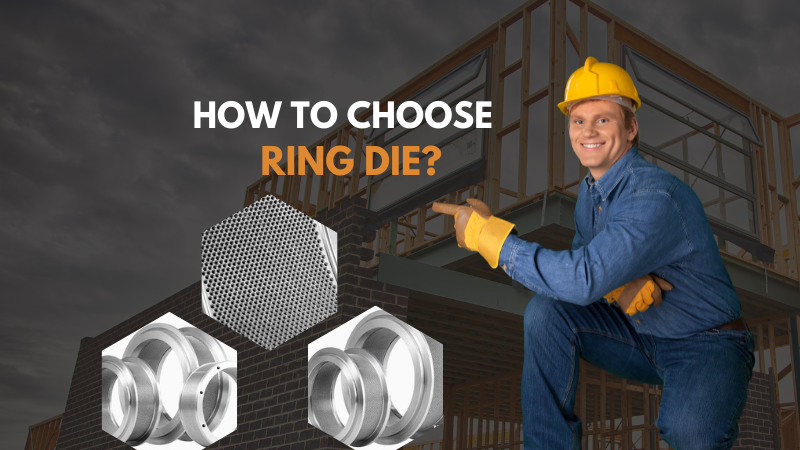
10. How to Choose a Ring Die
A ring die is a precision component that directly affects the operation of a pellet mill. The right choice depends on the equipment, material, production targets, pellet dimensions, and operating conditions. Buyers should assess the following factors before placing an order.
10.1 Material of the Ring Die
Ring dies may be made from carbon steel, alloy steel, stainless steel, or other suitable materials depending on the application and design. Material selection should take into account wear resistance, strength, heat treatment, operating conditions, and the manufacturer's recommendations. Ask the supplier to confirm the specified material and any required documentation.
10.2 Compression Ratio
The compression ratio affects the resistance encountered as material passes through the die holes. The appropriate ratio depends on the raw material, its moisture content, formulation, pellet dimensions, and the desired pellet characteristics.
A lower compression ratio may reduce resistance in some applications and may support higher output, but it can also affect pellet durability and quality. A higher ratio may be required for other materials, although it can increase the load on the equipment. There is no single ratio that is suitable for every application, so the selection should be based on technical data and, where possible, production testing.
10.3 Die Hole Shape and Dimensions
Ring dies can use different hole configurations, including straight holes and designs with tapered or stepped sections. Hole diameter, effective working length, entrance geometry, and finish can influence material flow and pellet formation.
The appropriate design depends on the raw material and required pellet dimensions. Provide the supplier with the current die specifications and operating details so that the proposed design can be evaluated accurately.
10.4 Production Capacity and Pellet Quality
Consider the required output alongside pellet durability, consistency, energy consumption, and equipment load. A die optimized for output alone may not deliver the required pellet quality. Define the target performance before comparing quotations.
10.5 Equipment Compatibility
Confirm the pellet mill manufacturer, machine model, installation dimensions, and roller shell configuration. Do not assume that two ring dies are interchangeable simply because they have similar external dimensions or are associated with the same equipment brand.
10.6 Manufacturing Quality and Inspection
Ask about dimensional inspection, die hole quality, material requirements, heat-treatment controls, and the documentation supplied with the product. If particular tolerances or inspection records are essential, include them in the technical specification before ordering.
10.7 Price, Lead Time, and Support
Compare the total purchasing cost rather than the unit price alone. Consider production lead time, shipping, packaging, expected maintenance needs, technical communication, and the consequences of production downtime. Ask the supplier to clarify which services are included in the quotation.
| Selection Factor | What to Confirm |
|---|---|
| Material | Material grade, wear requirements, heat treatment, and documentation. |
| Compression ratio | Suitability for the raw material, pellet dimensions, and target quality. |
| Die hole design | Hole diameter, geometry, working length, and surface finish. |
| Equipment compatibility | Pellet mill model, installation dimensions, and roller shell requirements. |
| Quality control | Inspection methods, tolerances, and agreed technical requirements. |
| Commercial terms | Price, lead time, packaging, delivery, and after-sales support. |
11. Jinding Products vs. Well-Known Brands
When comparing ring die suppliers, buyers should evaluate technical suitability, product quality, customization options, delivery, and total cost. Established equipment brands may offer components designed for their own machines, while specialist parts manufacturers may provide additional options for buyers seeking replacement components or customized specifications.
The best choice depends on the machine, the required component, and the supplier's verified capabilities. The following comparison points can help buyers organize their evaluation.
| Comparison Factor | Questions to Ask | Why It Matters |
|---|---|---|
| Compatibility | Does the supplier confirm the exact pellet mill model and dimensions? | Helps reduce the risk of ordering an unsuitable component. |
| Customization | Can the supplier review drawings and evaluate non-standard requirements? | Important for special equipment configurations or process requirements. |
| Quality assurance | What material, dimensional, and inspection records are available? | Provides a basis for evaluating conformity with the specification. |
| Total cost | What are the quoted price, shipping cost, and lead time? | Supports a more complete purchasing comparison than unit price alone. |
| Technical support | What support is available for installation, maintenance, and product questions? | Helps buyers plan for operation and future replacement needs. |
Jinding Machinery states that it focuses on pellet mill parts and offers customization based on customer requirements. Buyers considering Jinding can submit their equipment details, drawings, and production requirements to confirm feasibility and obtain a quotation. Claims about price, service life, or performance should be assessed using comparable specifications and actual operating conditions.
Compare Your Ring Die Requirements
12. Conclusion
A ring die is a key wear component in pellet production. Its design, material, hole configuration, compression ratio, and compatibility with the pellet mill all influence production performance. Appropriate use, inspection, cleaning, and storage can help reduce avoidable operating problems and support consistent production.
Before selecting a ring die, define your raw material, pellet dimensions, target output, equipment model, and quality requirements. Then compare suppliers based on technical fit, manufacturing quality, customization capability, delivery terms, and support. Requesting a technical review before ordering can help reduce the risk of selecting the wrong specifications.
Jinding Machinery manufactures ring dies, flat dies, roller shells, and other pellet mill parts. If you need a replacement ring die or would like to discuss a customized component, visit the ring die product page, explore custom solutions, or contact the team through the official contact page to confirm the technical details.


Notice: Ensure your image is no larger than 2MB before uploading.